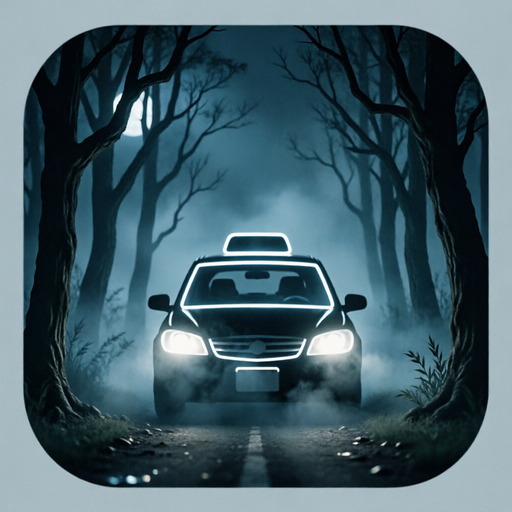
Road to Jukai Exploration Guide: Surviving the Haunted Routes and Night Shifts
Master Road to Jukai exploration with our complete survival guide. Learn route navigation, night-shift mechanics, and how to handle cursed passengers.
Navigating the fog-shrouded mountain passes of rural Japan is terrifying enough, but when your taxi fares might not belong to the living world, every turn could be your last. Mastering your Road to Jukai exploration strategy is the only way to survive the grueling six night shifts between isolated settlements. Whether you are managing your vehicle's headlights or monitoring the unsettling entity in your backseat, successful Road to Jukai exploration demands sharp navigation skills, steady nerves, and an intimate understanding of the game's cursed road network.
Developed by Endflame and published by tinyBuild, this first-person psychological horror title puts players behind the wheel of a rural night-shift cab bordering an infamous, cursed forest. With the full launch slated for 2027 and public playtests opening up via the Steam store page for Road to Jukai, players are already dissecting the layout of these treacherous mountain roads.
Below, we break down everything you need to know about the map zones, environmental hazards, shift progression, and survival tactics required to make it to sunrise.
The Map Layout: Understanding the Rural Road Network
The map in Road to Jukai centers around a twisting arterial highway cut through dense woodland, branching off into forgotten villages, mountain shrines, and abandoned rest stops. Unlike linear horror titles, your exploration route changes dynamically depending on the passenger pickup requests you accept over the radio.
The environment is designed to induce claustrophobia through heavy volumetric fog, failing streetlamps, and winding elevation changes. Memorizing the general layout of the primary sectors gives you a massive advantage when panic sets in.
Primary Map Sectors
| Sector Name | Elevation / Terrain | Threat Level | Key Landmarks |
|---|---|---|---|
| Valley Basin (Town Alpha) | Flat, asphalt, sparse streetlights | Low | Central Gas Station, Taxi Depot, Residential Strip |
| Lower Ridge Road | Moderate incline, blind curves, guardrails | Medium | Dilapidated Bus Stop, Shinto Torii Gate, Overlook |
| The Outer Fringe | Dense tree canopy, unpaved gravel, heavy mist | High | Abandoned Lumber Mill, Old Tunnel, Roadside Jizo Statues |
| Deep Forest Perimeter | Extreme switchbacks, washed-out dirt paths | Critical | Blocked Mountain Pass, Cursed Shrine, The Iron Gate |
Navigating these routes requires balancing speed against visibility. Accelerating blindly down the Lower Ridge Road might get you away from a lingering shadow, but missing a switchback will total your cab and leave you stranded on foot in the cursed timberland.
Shift-by-Shift Map Progression and Environmental Escalation
Your taxi gig spans six distinct night shifts, with each shift altering road conditions, opening previously barricaded routes, and ramping up paranormal phenomena. Effective Road to Jukai exploration requires adapting to these shifting environmental parameters every time you clock in.
During early shifts, your primary concern is navigating minor detours and managing basic vehicle controls. By the late shifts, entire roads twist unexpectedly, signs point in conflicting directions, and the environment actively works to disorient your internal compass.
Night Shift Breakdown
| Shift | Primary Route Focus | Environmental Hazards | Fare Type / Threat |
|---|---|---|---|
| Night 1 | Valley Basin to Lower Ridge | Light rain, occasional fog pockets | Standard commuters, lost tourists |
| Night 2 | Lower Ridge to Outer Fringe | Heavy mist, flickering street lighting | Distressed locals, uncommunicative passengers |
| Night 3 | Outer Fringe bypass routes | Road obstructions, wildlife/shadow crossings | Eerie fares with unusual, off-route requests |
| Night 4 | Deep Forest Perimeter access | Thick fog, dead-end road loops, radio static | Non-responsive entities, sudden backseat anomalies |
| Night 5 | Inter-settlement mountain shortcuts | Total blackout, shifting landmark positions | Hostile apparitions, violent cab disruptions |
| Night 6 | Full map traverse to sunrise | Severe weather, complete spatial distortion | Climax fares, route-blocking supernatural events |
During community reports from early playtesters, players noted that Nights 4 and 5 represent a sharp difficulty spike. Road signs may display distorted kanji or loop you back toward the Deep Forest Perimeter if you fail to check your physical dashboard map against external landmarks.
In-Vehicle Mechanics and Exploration Survival
Your taxi is your only sanctuary during Road to Jukai exploration, functioning as both your mobile base and your lifeline. Managing vehicle maintenance, internal mirrors, and lighting systems is just as vital as knowing which road to take at a fork.
Ignoring dashboard alerts or letting your high beams drain your battery leaves you vulnerable to the entities lurking just beyond the tree line.
Essential Vehicle Systems & Survival Utility
| System / Control | In-Game Function | Strategic Exploration Value |
|---|---|---|
| Headlight High Beams | Cuts through deep mountain mist | Spots road hazards early; may attract unwanted attention if left on |
| Rearview Mirror | Monitors backseat passenger activity | Essential for detecting entity posture changes before an attack |
| Cabin Light | Illuminates vehicle interior | Helps defuse certain paranormal passenger states; lowers outside visibility |
| Radio / Dispatch | Receives fares and dispatch updates | Warns of blocked routes; emits static alerts near active anomalies |
| Fuel & Temperature Gauge | Tracks mechanical health | Prevents engine stalls in high-threat sectors like the Deep Forest Perimeter |
Key Vehicle Management Guidelines:
- Keep Eyes on the Mirror: Check your rearview mirror every 5 to 10 seconds. In player experiences shared online, entities often change position or creep closer while your focus remains solely on the pavement.
- Toggle Headlights Tactically: While high beams reveal distant road debris, certain spectral entities react aggressively to harsh light. Switch to low beams when passing active roadside shrines.
- Listen Through the Radio Static: Sudden frequency changes or warped dispatch audio indicate that an anomaly is nearby or that your current route is no longer safe to traverse.
Identifying and Handling Cursed Passengers
Picking up fares is how you earn your pay and progress through the shifts, but not every passenger waiting by the roadside is a living resident of the isolated towns. During deep Road to Jukai exploration, identifying passenger warning signs determines whether you complete your run or end up another statistic of the forest.
Fares generally fall into three behavioral categories: Standard Citizens, Disturbed Locals, and Non-Human Entities. Each requires a distinct approach while driving.
Passenger Classification and Response Protocol
| Passenger Type | Visual / Audio Cues | Route Demands | Required Driver Action |
|---|---|---|---|
| Standard Citizen | Speaks clearly, pays standard yen fare, normal breathing | Direct drop-off at designated town points | Drive safely, follow posted navigation routes |
| Disturbed Local | Shivering, incoherent mumbling, looks out side windows | Asks for sudden detours near the forest edge | Decline unverified stops, proceed directly to public hubs |
| Restless Spirit | Pale, completely silent, face obscured, temperature drops | Directs you toward dead-end mountain roads | Keep cabin light on, do not make mirror eye contact, stay on main roads |
| Malevolent Entity | Distorted body language, audio static, reflection anomalies | Demands access to the Deep Forest Perimeter | Prepare defensive vehicle tools, avoid looking back, reach safe zone immediately |
Community reports emphasize that paying close attention to passenger dialogue is critical. If a fare asks you to turn down an unmarked dirt trail that does not appear on your dispatch log, continuing along the paved arterial highway is almost always the safer choice.
Essential Exploration Tips for Surviving the Night Shifts
To ensure your Road to Jukai exploration remains efficient and your taxi stays intact across all six shifts, implement these core survival tactics during every run:
- Map Your Route Before Shifting into Drive: Study your dashboard map when you accept a fare. Memorize key intersection markers so you do not have to look away from the road in high-fog zones.
- Prioritize Paved Surfaces: Dirt paths and unmapped turnoffs often trigger high-threat encounters. Unless a verified dispatch request requires it, stick to asphalt routes.
- Manage Speed on Switchbacks: Crashing into a barrier damages your headlights and radiator. A stalled cab in the middle of the Outer Fringe makes you an easy target.
- Use Roadside Jizo Statues as Navigational Anchors: These small stone statues often line safe bypass routes and provide visual confirmation that you have not entered a spatial loop.
- Watch the Clock: Your ultimate goal is surviving until sunrise. Pacing your routes and avoiding unnecessary detours ensures you don't run out of fuel before the shift ends.
Thorough Road to Jukai exploration rewards cautious drivers who treat the environment with respect, maintain their vehicle diligently, and keep their eyes firmly fixed on both the road ahead and the mirror above.
Frequently Asked Questions (FAQ)
What is the primary objective in Road to Jukai?
The primary goal is to survive six consecutive night shifts as a taxi driver operating in a remote, haunted Japanese region, transporting passengers between isolated towns while managing vehicle mechanics and supernatural threats.
How does Road to Jukai exploration work during night shifts?
Road to Jukai exploration revolves around navigating a semi-open rural road map using a dashboard navigation system, road signs, and physical landmarks. As shifts progress from Night 1 to Night 6, routes become more dangerous, fog thickens, and spatial distortions alter familiar pathways.
Can you leave your taxi during exploration?
While the primary gameplay occurs from the first-person perspective behind the wheel, certain interactions—such as clearing road debris, inspecting locked gates, or checking vehicle damage—may require interacting with the immediate environment around your cab.
When is Road to Jukai releasing?
Road to Jukai, developed by Endflame and published by tinyBuild, is scheduled for a full release on PC via Steam in 2027, with public playtests available leading up to launch.
Related Guides
Road to Jukai Areas Guide: Map Stages, Vows, and Preparation
Navigate all Road to Jukai areas with our complete spiritual mapping guide. Explore preparation zones, sewing stages, ethics study, and vow ceremonies.
Road to Jukai Locations Guide: Map Routes, Waypoints, and Hidden Secrets
Master navigation across all Road to Jukai locations. Discover hidden paths, fast travel waypoints, loot stashes, and survival tips in our detailed map guide.
Road to Jukai Map: Complete Roadmap, Milestones, and Timeline Guide
Navigate your formal Zen commitment with our comprehensive Road to Jukai map covering timelines, precepts, lineage charts, and ceremony preparation.
Road to Jukai Secrets: Full Map Guide and Route Breakdown
Uncover hidden routes and survive every shift with our ultimate guide to Road to Jukai secrets, passenger encounters, map navigation, and lore.